Frequently Asked Questions About Cable Trays & Trunking
1. What is the difference between cable trays and cable trunking?
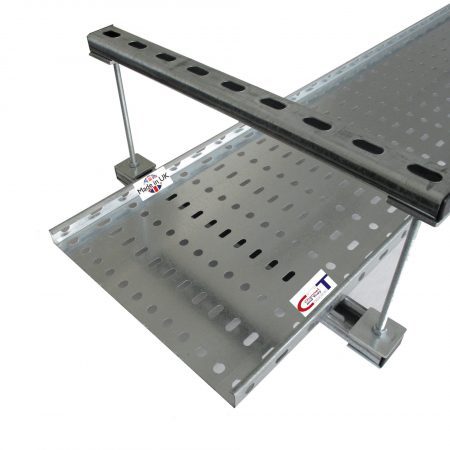
Cable trays are open support systems designed to carry and organize electrical cables, while cable trunking is an enclosed system that provides additional protection against dust, moisture, and physical damage. Cable trays offer easier access for maintenance, whereas trunking provides a cleaner and more protected installation.
2. What are cable trays used for?
Cable trays are used to support, route, and manage electrical, data, and communication cables in commercial, industrial, and infrastructure projects. They provide a safe and organized pathway for cables while allowing easy inspection and future expansion.
3. What types of cable trays are available?
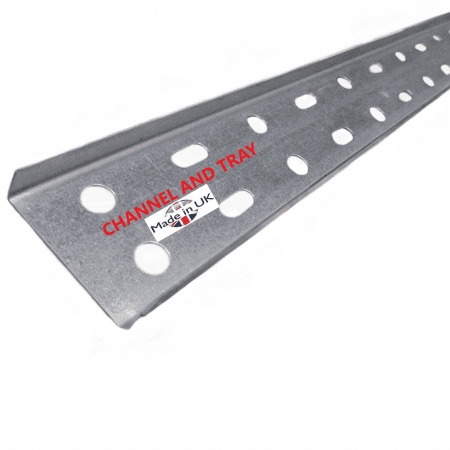
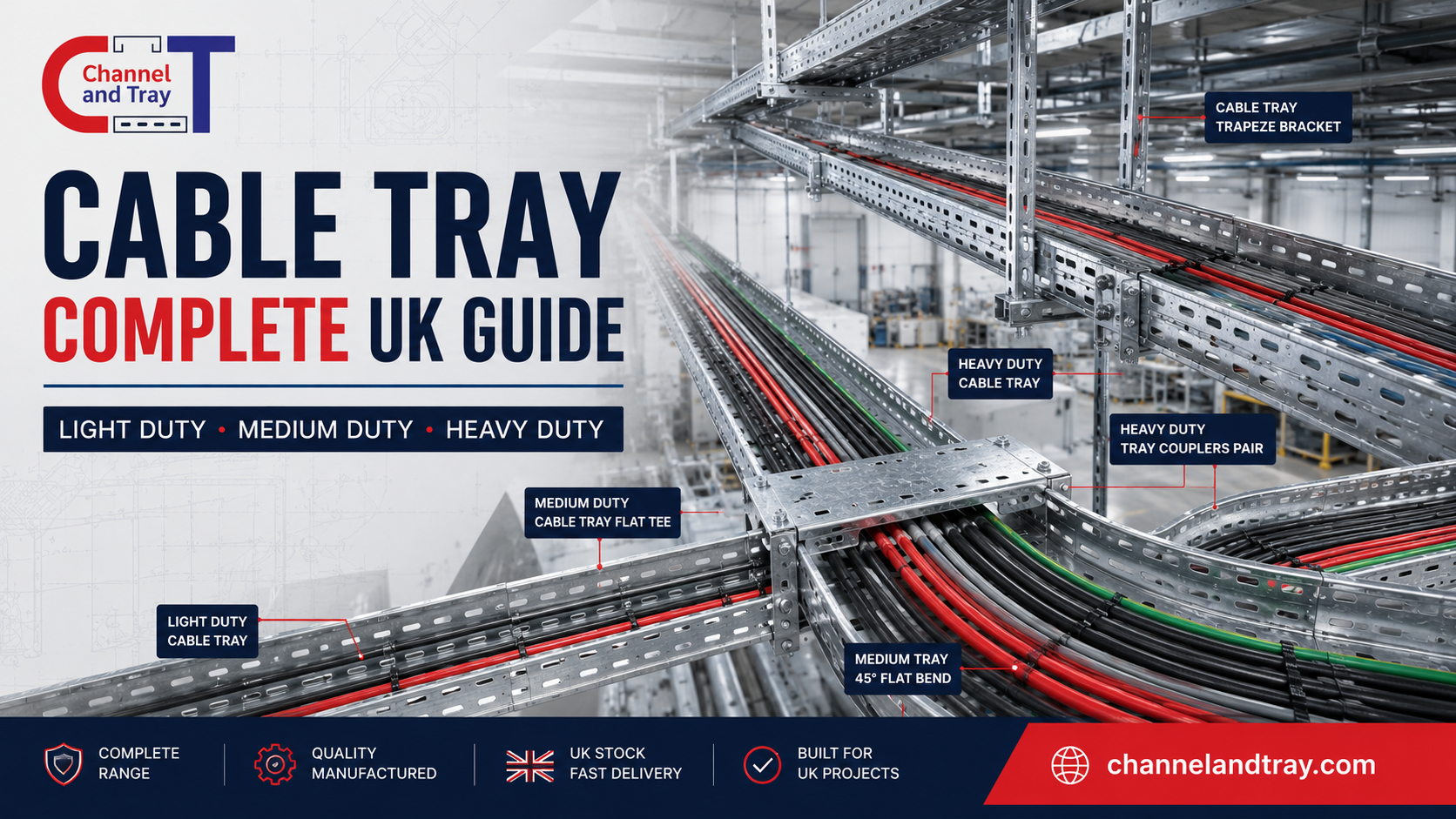
Channel and Tray supplies a variety of cable tray systems, including light-duty, medium-duty, and heavy-duty cable trays. Different sizes and load capacities are available to suit various installation requirements.
4. Why should I use cable trunking?
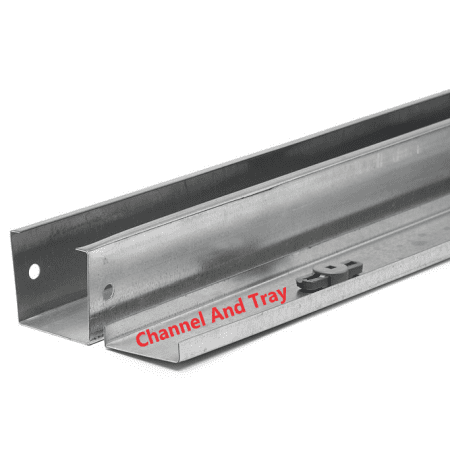
Cable trunking protects cables from accidental damage, dust, and environmental factors while maintaining a neat and professional appearance. It is commonly used in offices, schools, hospitals, factories, and commercial buildings.
5. Are cable trays suitable for outdoor installations?
Yes. Cable trays manufactured from galvanized steel, hot-dip galvanized steel, or stainless steel are suitable for outdoor applications and environments where corrosion resistance is required.
6. How do I choose the right cable tray size?
The correct cable tray size depends on the number of cables, cable diameter, future expansion requirements, and load capacity. Choosing a tray with sufficient space helps maintain proper cable management and ventilation.
7. What industries use cable tray systems?
Cable tray systems are widely used in commercial buildings, manufacturing plants, warehouses, data centres, healthcare facilities, educational institutions, power generation sites, and telecommunications projects.
8. Can cable trays support heavy cable loads?
Yes. Heavy-duty cable trays are specifically designed to support large volumes of power and industrial cables while maintaining structural integrity over long spans.
9. What accessories are available for cable tray installations?
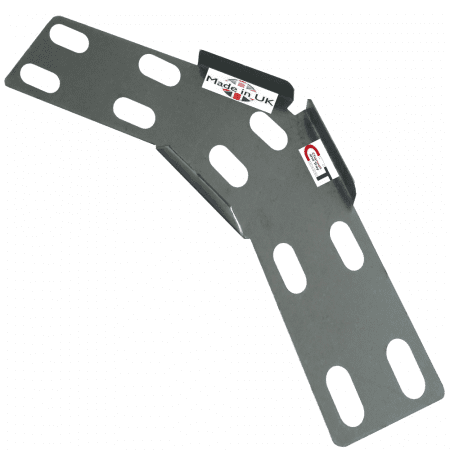
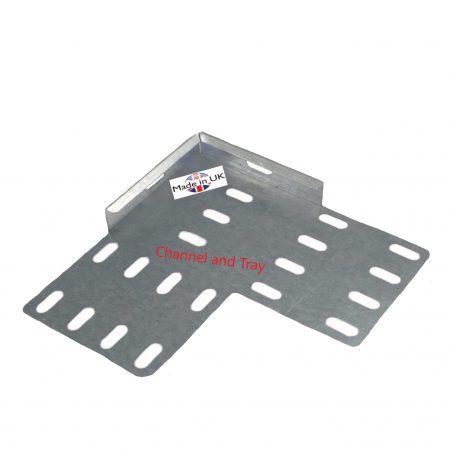
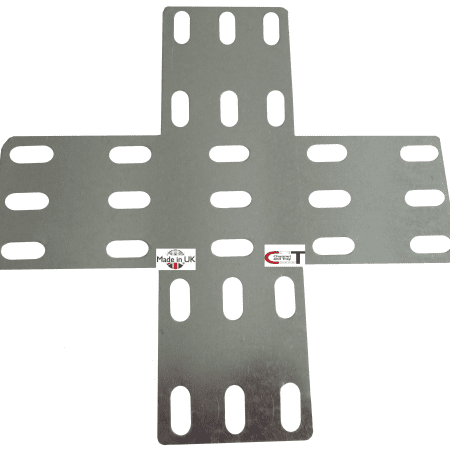
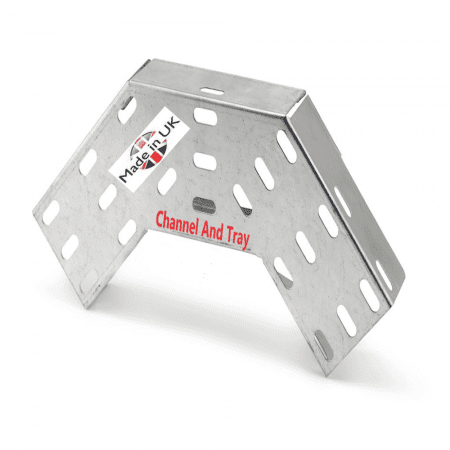
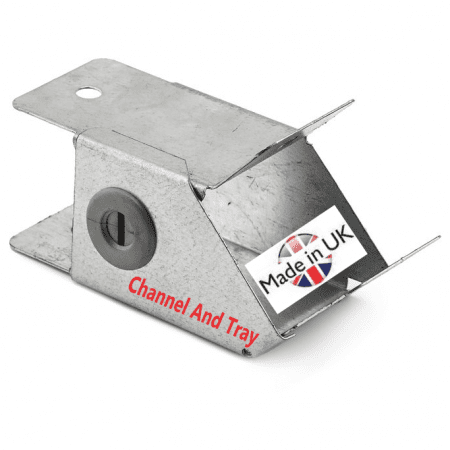
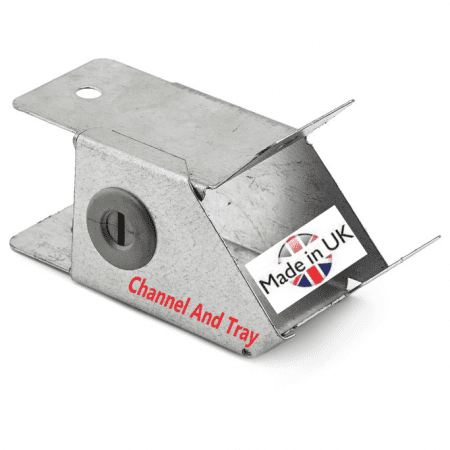
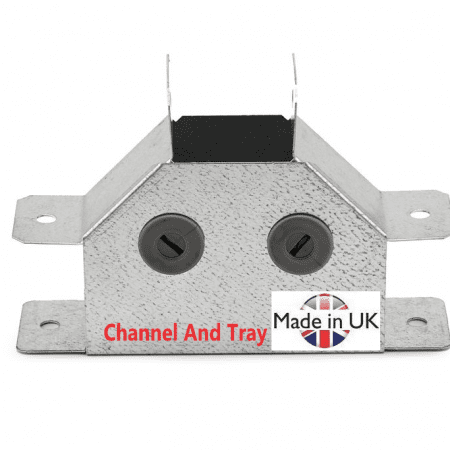
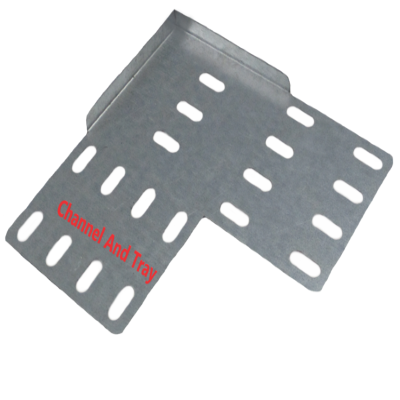
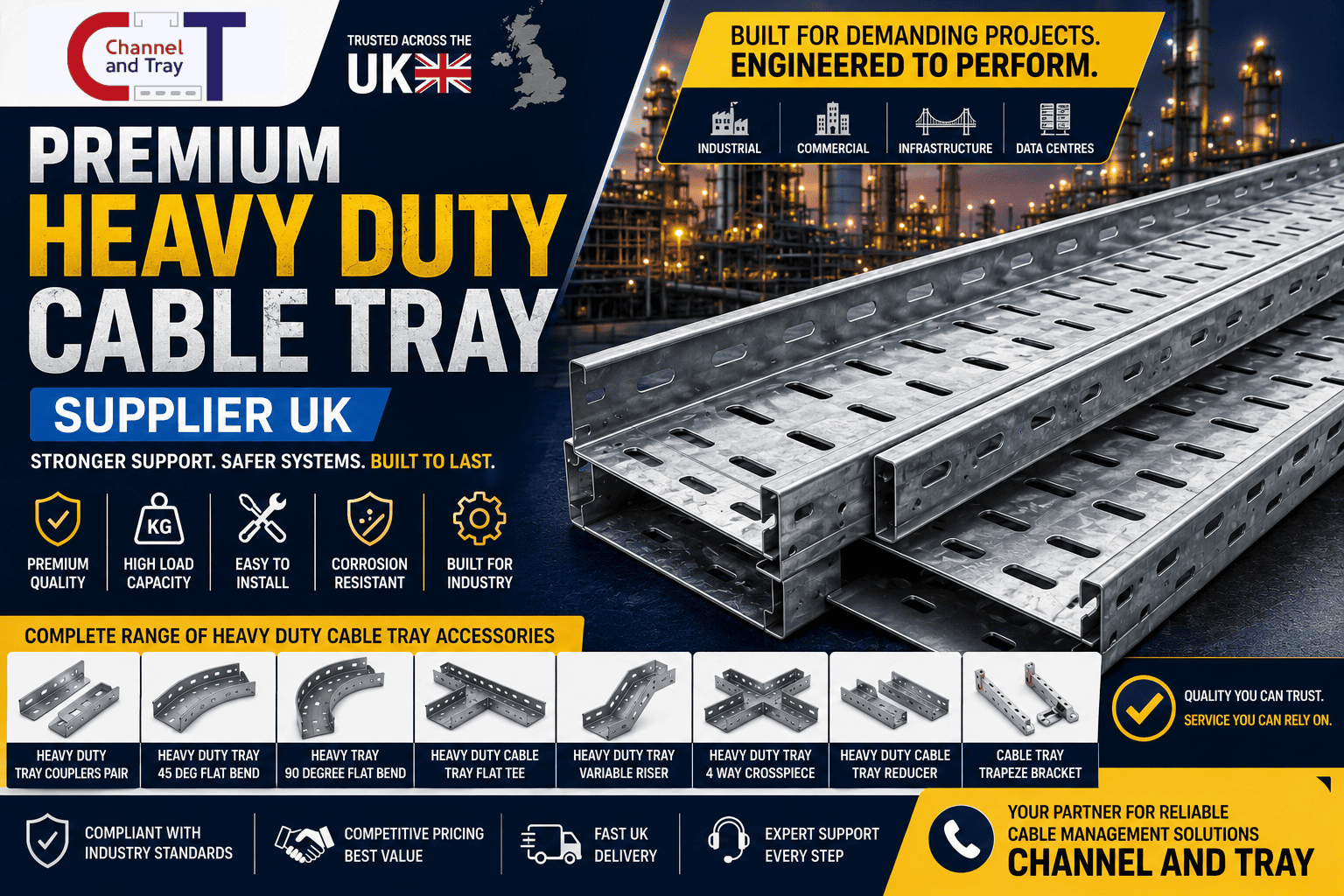
Common cable tray accessories include bends, tees, reducers, couplers, risers, support brackets, threaded rods, and fixing components. These accessories help create a complete cable management system.
10. Why choose Channel and Tray for cable trays and trunking?
Channel and Tray supplies high-quality cable management products throughout the UK, offering reliable cable trays, trunking systems, accessories, competitive pricing, and expert customer support to meet the requirements of commercial and industrial projects.
11. Do cable trays improve cable ventilation?
Yes. The open design of cable trays allows air to circulate around cables, helping to dissipate heat and improve overall system performance, particularly in installations with high cable volumes.
12. Can cable trays and trunking be used together?
Absolutely. Many installations use cable trays for main cable routes and trunking for areas requiring additional protection or a cleaner finish, creating a complete and efficient cable management solution.