Choosing the right cable tray can improve cable protection, installation speed and long-term system performance.
From commercial buildings to factories, data centres and infrastructure projects, cable tray provides a practical way to organise and support electrical cables. However, not every installation needs the same tray specification.
The correct choice depends on cable weight, span length, environment, installation method and future expansion requirements. This guide explains the main cable tray types and fittings used across the United Kingdom.
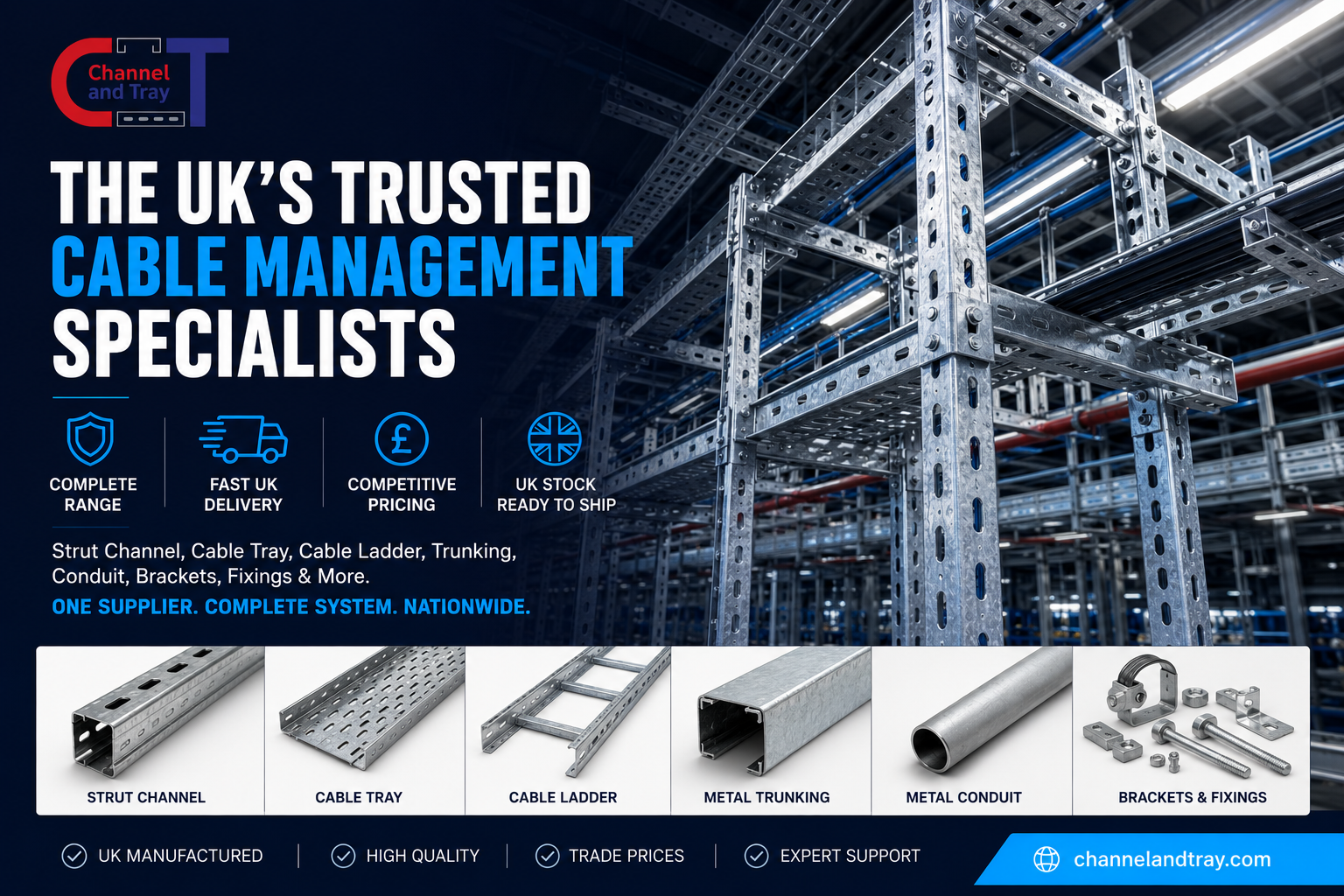
For a complete range of cable management products, explore the Cable Trays and Trunking collection.
What Is a Cable Tray?
Cable tray is a metal support system designed to carry and organise electrical, power, data and control cables. Its open design allows easy access, improved ventilation and faster installation compared with enclosed cable management systems.
Galvanised cable tray remains popular across UK commercial and industrial projects because it offers strength, durability and practical cable access.
The correct tray duty rating matters. A light duty system suits lighter cable loads, while medium and heavy duty systems support progressively greater loads.
Light Duty Cable Tray for Commercial Installations
Light Duty Cable Tray suits applications where cable loads remain moderate and spans stay within the system’s design limits.
Typical applications include offices, retail units, schools, healthcare buildings and commercial fit-outs. The lighter construction can simplify handling and speed up installation.
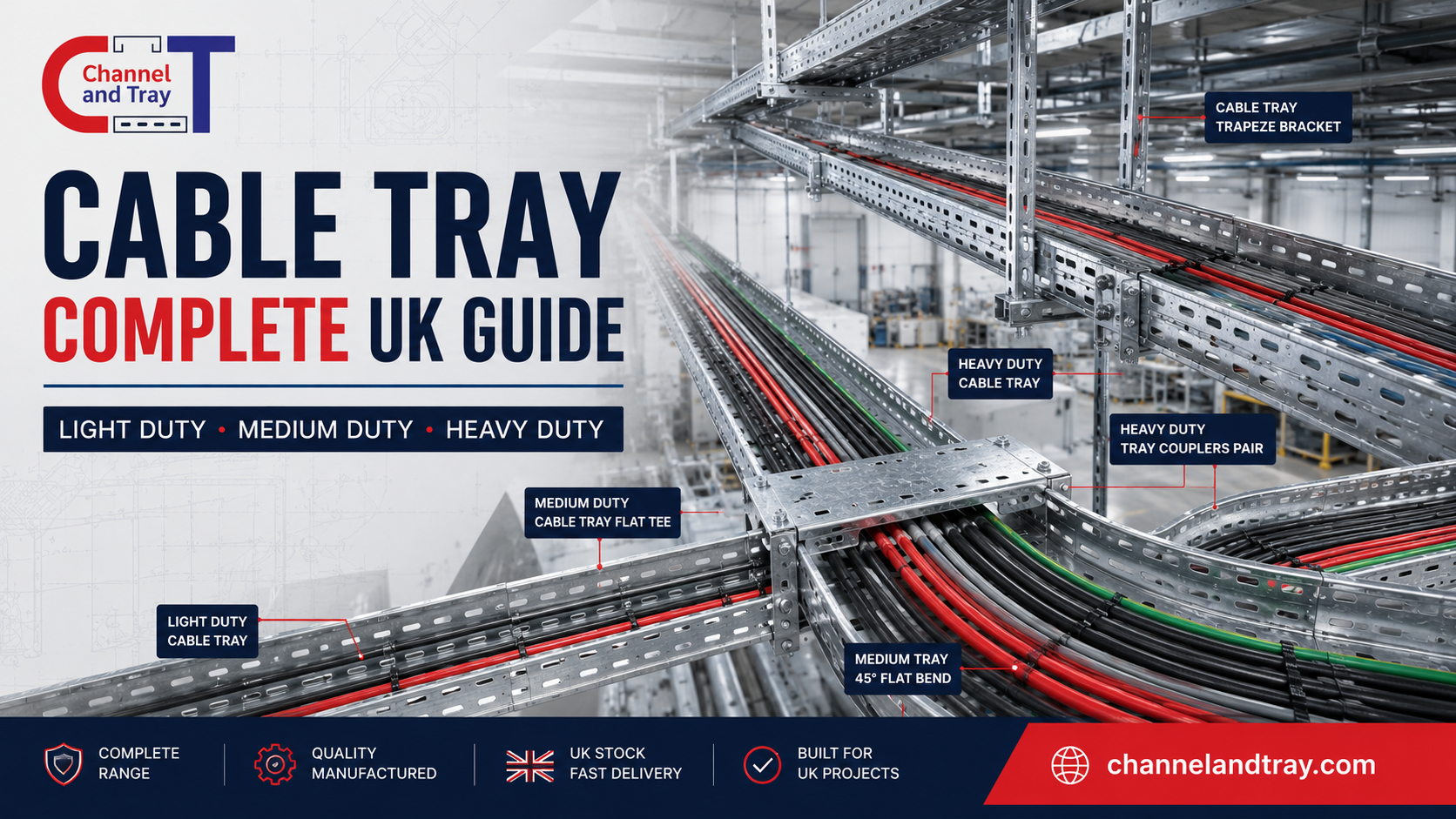
A Light Duty 90 Degree Flat Bend helps installers change direction cleanly without cutting and modifying straight tray sections on site. Correct fittings also help maintain a neat cable route and reduce sharp edges.
For cable security, Stainless Cable Ties provide a durable solution for securing cables within the tray. Stainless steel performs well in demanding environments where long-term reliability matters.
Using light duty tray for excessive cable loads can cause deflection, deformation and installation problems.
Medium Duty Cable Tray for Flexible Cable Management
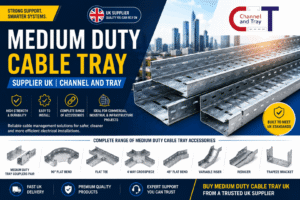
Medium Duty Cable Tray handles many of the mixed cable routes found in commercial and industrial installations.
Cable Tray Medium Duty offers a useful balance between load capacity and manageable installation weight. It can support power, control and data cables across a wide range of applications.
The system works particularly well for secondary power distribution, plant rooms, commercial buildings and industrial support areas.
Medium Duty Cable Tray Flat Tee
The Medium Duty Cable Tray Flat Tee creates a clean 90-degree branch from a main tray route. Installers can use it to distribute cables towards equipment, rooms or secondary routes.
A proper tee fitting provides a cleaner and more reliable junction than cutting and modifying tray sections on site.
45deg Flat Bend Medium Duty Tray
The Medium Tray 45deg Flat Bend allows a controlled directional change in a horizontal cable route. It helps installers route cables around structural obstacles while maintaining a professional installation.
Using the correct bend also helps avoid unnecessary cable stress at direction changes.
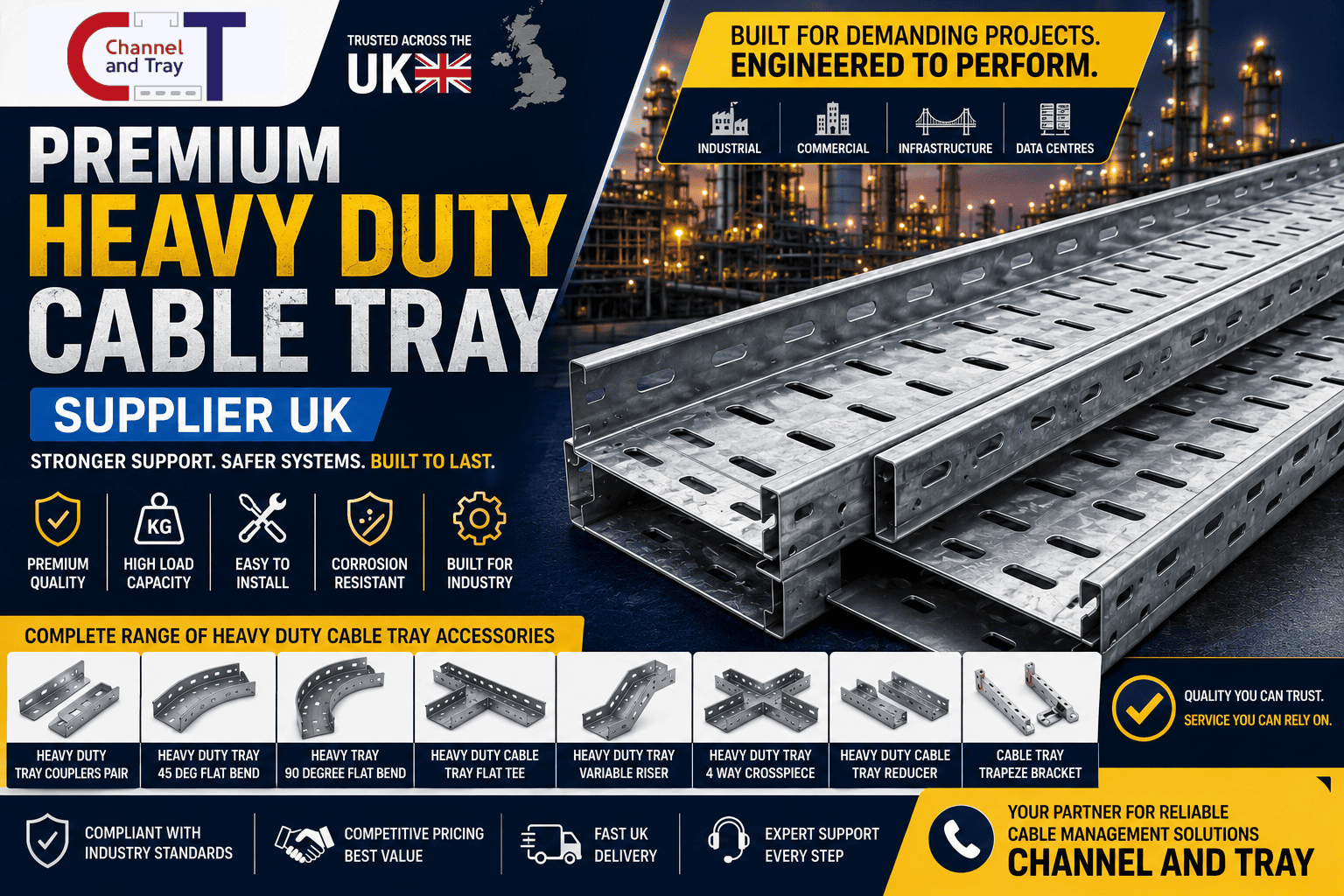
Heavy Duty Cable Tray for High-Load Applications
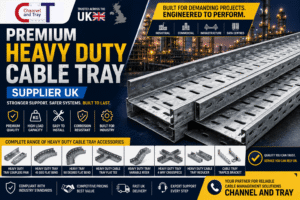
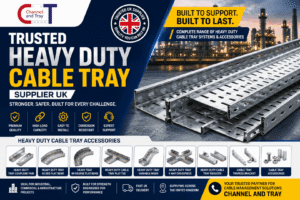
Heavy Duty Cable Tray supports demanding cable routes where cable weight and structural loads become significant.
The Heavy duty systems suit manufacturing facilities, power infrastructure, data centres, transport projects and large industrial installations.
Large power cables can create substantial loads across long tray runs. The tray specification must therefore match the cable weight, support spacing and installation conditions.
Heavy Duty Tray Couplers Pair
The Heavy Duty Tray Couplers Pair connects tray sections while maintaining structural continuity across the installation.
Long cable tray runs require secure connections at every joint. Correct couplers help create a stable system designed for demanding loads.
Using unsuitable couplers can weaken the connection between tray sections and create unnecessary structural risks.
Heavy Duty Cable Tray Flat Tee
The Heavy Duty Cable Tray Flat Tee creates branch connections on high-load cable routes.
It provides a purpose-designed junction for distributing cables from a main route to secondary areas. This is particularly useful in large industrial and infrastructure installations.
Improvised junctions can create weak points where cable weight concentrates.
Cable Tray Trapeze Bracket for Overhead Support
The support system matters as much as the tray itself.
A Cable Tray Trapeze Bracket provides an effective method for suspending tray systems from ceilings and structural frameworks.
Trapeze support can help create clean overhead cable routes in commercial buildings, plant rooms, warehouses and industrial facilities.
Correct support spacing depends on the tray system, cable load and project requirements. Installers should always follow the manufacturer’s technical guidance and project specifications.
A well-designed support system helps reduce excessive deflection and keeps cable routes organised.
Why Correct Cable Tray Fittings Matter?
The right fitting creates a complete system.
Straight tray sections alone cannot handle every installation requirement. Projects often need bends, tees, reducers, couplers and support accessories.
Correct fittings provide several benefits:
- Cleaner directional changes
- Faster installation
- Better route planning
- Reduced site modification
- Improved installation appearance
- More consistent system performance
A professional cable management system should use fittings designed for the selected tray duty rating.
How to Choose the Right Cable Tray in the UK
Start with the cable load, then design the route.
Before selecting a cable tray system, consider:
- Cable weight – Calculate the expected load across each tray section.
- Tray width – Allow sufficient space for current cables and future expansion.
- Support spacing – Follow the manufacturer’s guidance for the selected system.
- Environment – Consider indoor, outdoor, coastal or corrosive conditions.
- Direction changes – Plan bends and tees before installation begins.
- Future capacity – Avoid designing every tray run at full capacity.
Light duty systems suit lighter cable routes. Medium duty systems provide greater capacity for mixed applications. Heavy duty systems suit demanding power and industrial installations.
Cable Tray for UK Commercial and Industrial Projects
Cable tray remains one of the most versatile cable management solutions available to UK contractors and engineers.
A small commercial project may require light duty tray and simple bends. A large industrial facility may require heavy duty tray, specialist couplers and suspended support systems.
The right specification improves installation efficiency and helps create a safer, more organised cable route.
For projects requiring a complete range of tray systems, fittings and accessories, visit the Channel and Tray cable management collection.
Frequently Asked Questions
- What is the difference between light, medium and heavy duty cable tray?
The main difference involves construction strength and load capacity. Light duty suits lighter cable loads, medium duty supports greater loads, and heavy duty suits demanding industrial and power applications.
- Can cable tray carry power and data cables?
Yes. Cable tray can support many types of electrical, control and data cables. The system must match the cable load and project requirements.
- What is a Cable Tray Trapeze Bracket used for?
A Cable Tray Trapeze Bracket supports tray systems from overhead structures. It helps create organised suspended cable routes.
- Why use a Heavy Duty Tray Couplers Pair?
Heavy duty couplers connect tray sections and help maintain the strength of high-load cable tray runs.
- What does a Medium Duty Cable Tray Flat Tee do?
It creates a 90-degree branch from a medium duty tray route, allowing cables to move into another direction.
- Why use Stainless Cable Ties?
Stainless Cable Ties offer long-term durability and reliable cable restraint in demanding electrical and industrial environments.
Final Thoughts: Choose the Right Cable Tray for the Job
Every cable management project starts with the correct specification.
Light duty, medium duty and heavy duty cable tray each serve different applications. The right bends, tees, couplers and support accessories complete the system.
Whether you are an electrician, contractor, engineer, facilities manager or homeowner, choosing the right cable tray can make installation cleaner, faster and more reliable.
Explore the complete cable management range from Channel and Tray for UK projects.
Right tray. Right fittings. Better cable management.