Imagine walking into a factory where cables are tangled around machinery, an office where wires run across walkways, or a server room where power and data cables are difficult to identify. These problems might appear minor at first, but they can lead to safety hazards, wasted maintenance time, damaged equipment, and unnecessary business expenses.
Proper cable management helps prevent these problems by keeping cables organised, securely supported, accessible, and protected. For businesses across the UK, from commercial offices to manufacturing facilities and data centres, a well-planned cable management system is an important part of maintaining a clean, safe, and efficient working environment.
At Channel and Tray, we supply cable management and electrical support products, including cable trays, cable ladders, strut channels, trunking systems, brackets, fittings, and accessories. Our goal is to help contractors, engineers, and businesses find practical solutions for organising electrical infrastructure.
What Is Proper Cable Management?
Cable management is the process of planning, routing, supporting, securing, and identifying electrical and communication cables. Rather than allowing wires to accumulate randomly, a properly designed system gives each cable route a clear purpose.
Depending on the installation, this may involve perforated cable trays, cable ladders, enclosed trunking, strut channel support systems, cable ties, brackets, and suitable fixings.
Good cable management is not simply about making cables look tidy. It involves selecting the right products, maintaining suitable support spacing, avoiding excessive cable tension, respecting cable manufacturers’ bending-radius requirements, and allowing appropriate access for inspection and maintenance.
The result is an installation that is easier to understand, safer to work around, and more manageable as the business grows.
How Proper Cable Management Creates a Cleaner Workplace?
1. Removes Cable Clutter from Work Areas
Loose cables running across floors, desks, production areas, and walkways can make a workplace look untidy and obstruct daily operations.
Using appropriate cable trays, trunking, and support brackets helps route cables away from busy working areas. In offices, this can create cleaner workstations. In factories and warehouses, planned overhead cable routes can help keep floors clear for employees, machinery, and material-handling equipment.
2. Makes Cleaning and Housekeeping Easier
Cable bundles on floors and around equipment can collect dust and debris, making cleaning more difficult. Cables routed through suitable support systems are generally easier to keep organised and inspect.
In environments where dust, moisture, hygiene, or contamination controls are important, the cable management system must be selected to suit the specific conditions. Appropriate enclosures, materials, and cleaning procedures may be necessary.
3. Creates a More Professional Environment
A clean, organised installation gives employees, maintenance teams, customers, and site visitors greater confidence in the workplace.
Clearly routed cables also make it easier to distinguish service routes, locate equipment connections, and plan future changes. For facilities managers, this can make routine inspections and maintenance planning more straightforward.
How Cable Management Improves Workplace Safety?
Poorly managed cables can create several avoidable hazards. Proper cable management helps address them through thoughtful design and installation.
- Reduced trip hazards:
Routing cables away from walkways helps reduce the risk of trips and falls. - Less physical damage:
Suitable trays, trunking, and supports help protect cables from accidental impacts, abrasion, crushing, and excessive movement. - Better maintenance access:
Organised routes make it easier for competent technicians to locate cables, inspect installations, and carry out repairs without disturbing unrelated services. - Improved electrical safety:
Correct cable selection, support, separation, protection, and installation practices help reduce risks associated with damaged insulation, unsuitable loading, and poor routing. - Better fire-risk management:
Cable routes and penetrations must be designed with applicable fire-safety requirements in mind. Fire-stopping should be maintained where cables pass through fire-resisting walls or floors, and suitable fire-resistant cable support arrangements should be used where required.
Cable trays alone do not guarantee a safe installation. Electrical design, appropriate protective devices, competent installation, inspection, and compliance with applicable regulations remain essential.
Which Cable Management Products Help Businesses?
Different industries require different solutions. Channel and Tray supplies products for a wide range of cable support applications.
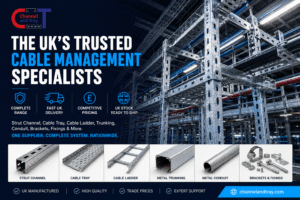
– Cable trays: Provide accessible support for electrical and communication cables in commercial and industrial installations.
– Cable ladders: Commonly used for larger cable runs and demanding installations where suitable load capacity and support spacing are specified.
– Cable trunking: Helps enclose and protect cables where a more contained routing system is needed.
– Strut channels: Provide modular support frameworks for cable trays, brackets, and other compatible services.
– Cable tray accessories: Bends, tees, reducers, couplers, and fittings help create organised routes around corners, branches, and changes in width.
– Brackets and fixings: Secure cable support systems to suitable structures when selected and installed for the required loads.
Choosing the right system depends on cable weight, environmental conditions, corrosion exposure, support spans, available space, access requirements, and the possibility of future expansion.
Is Proper Cable Management Expensive?
For many businesses, proper cable management is a cost-effective investment when evaluated over the life of the installation.
The initial cost may include trays, ladders, metal trunking, brackets, fixings, design work, and installation labour. However, an improvised or poorly planned installation can create additional expenses through cable damage, longer fault-finding times, difficult upgrades, and avoidable operational disruption.
For example, consider a warehouse that needs to install additional machinery. If existing cables are routed through a clearly organised, accessible support system, technicians may be able to plan and install new cable routes more efficiently. If cables are tangled, unsupported, or inaccessible, the same project could require extra labour to identify existing services and reorganise the installation.
The potential savings vary by site, so there is no universal percentage of cost reduction. The important point is to compare the total cost of installation, maintenance, repairs, downtime, and future modifications rather than focusing only on the lowest purchase price.
How to Make Cable Management More Cost-Effective?
- Plan before installation: Map cable routes and identify current and future service requirements.
- Choose suitable products: Avoid both under-specification and unnecessary over-specification.
- Use compatible accessories: Correct fittings can simplify installation and reduce improvised site modifications.
- Allow for future growth: Where practical, plan routes with suitable space for anticipated additional cables.
- Label and document cables: Clear identification can make fault-finding and maintenance more efficient.
- Inspect regularly: Check supports, fixings, cable condition, and signs of corrosion or overloading.
These steps help businesses make better use of their infrastructure while supporting long-term reliability.
Why Choose Channel and Tray?
Channel and Tray provides cable management and electrical support products for contractors, engineers, installers, procurement teams, and businesses across the UK.
Our product range includes cable trays, cable ladders, light-, medium-, and heavy-duty cable tray systems, strut channels, trunking, brackets, fittings, and accessories. We aim to help customers source practical products for commercial, industrial, and infrastructure projects.
Our vision is to become a trusted provider of cable management solutions, recognised for product quality, reliable service, and a customer-focused approach. We believe that well-planned cable infrastructure supports safer workplaces, more efficient maintenance, and better long-term project outcomes.
Get Cleaner Workplace Starts with Better Cable Management
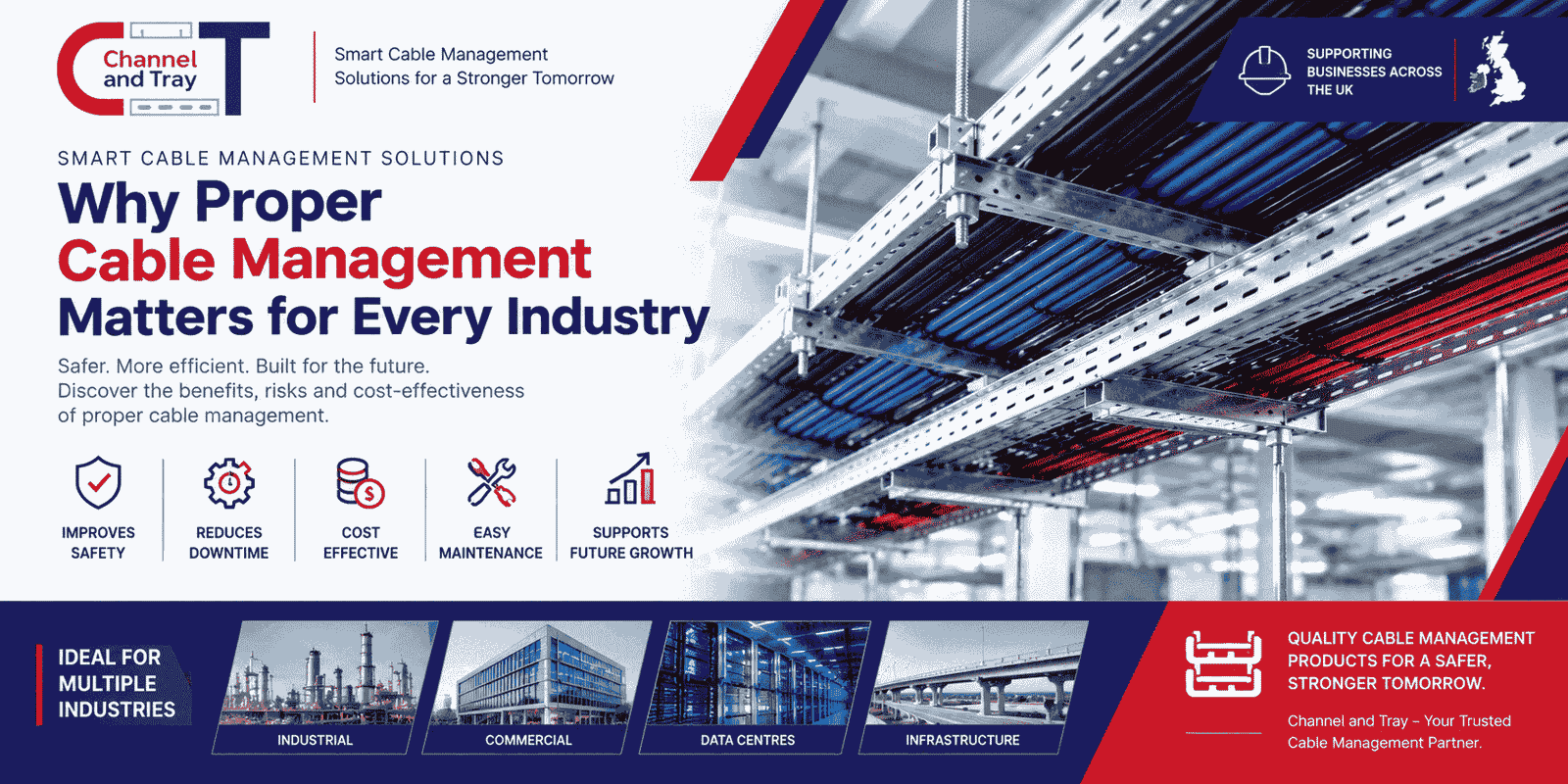
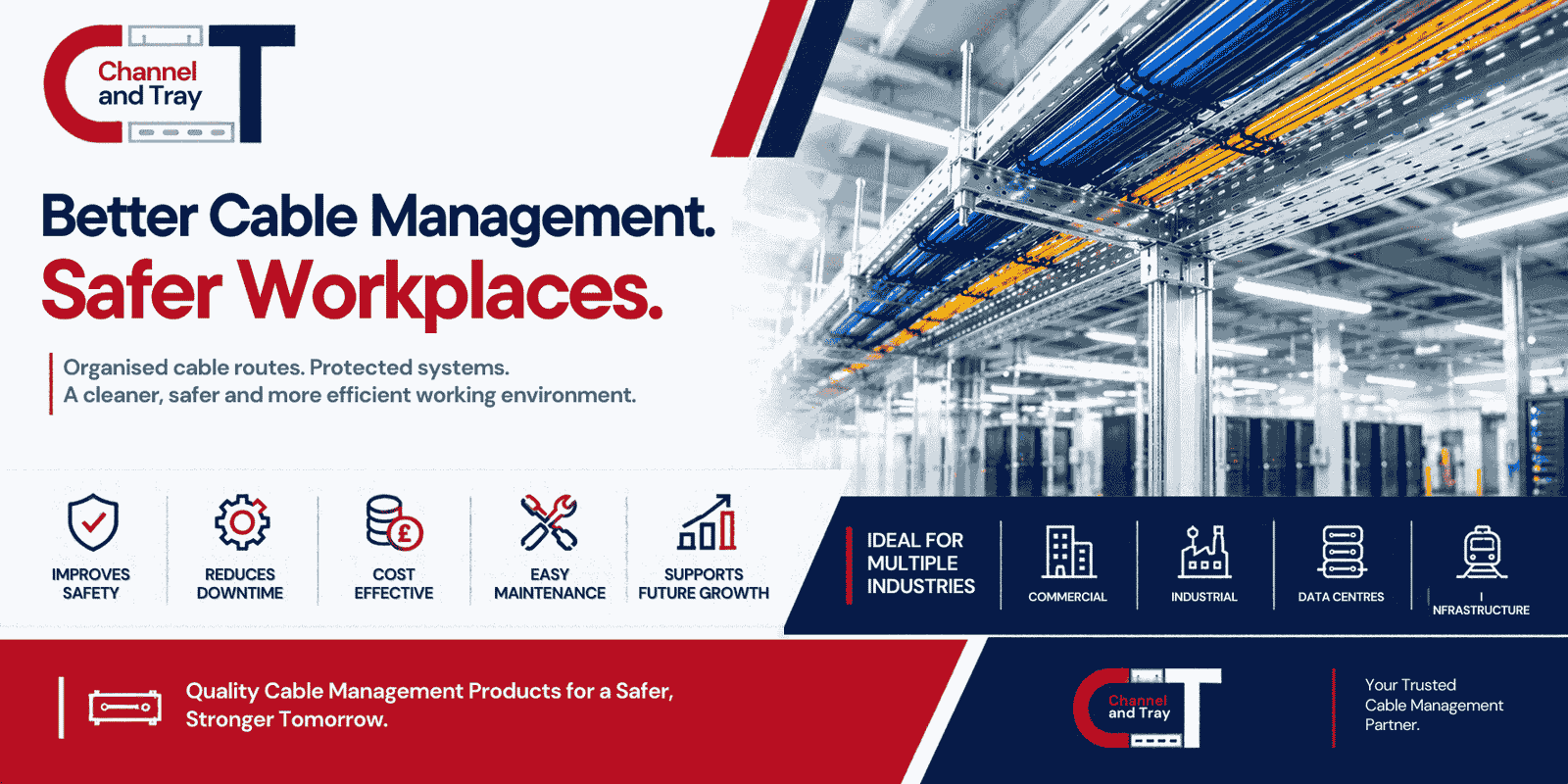
Proper cable management is much more than an aesthetic improvement. It helps keep walkways clear, supports cable protection, simplifies maintenance, and makes future upgrades easier to manage.
Although an organised system requires an initial investment, the long-term value can be significant when it reduces avoidable repairs, labour, and disruption. The best solution is one that meets the site’s technical requirements, supports safe working practices, and provides flexibility for future needs.
Whether you manage a commercial office, warehouse, manufacturing plant, or data centre, investing in suitable cable management is a practical step towards a cleaner, safer, and more efficient business.
Looking for cable trays, cable ladders, strut channels, or complete cable management products for your next UK project?
Explore the product range at Channel and Tray
Common Queries
1. What is the main purpose of cable management?
Cable management organises, supports, and protects electrical and communication cables, helping improve workplace safety, accessibility, and maintenance.
2. How does cable management make a workplace safer?
It helps keep cables away from walkways, reduces the risk of physical damage, and makes installations easier to inspect and maintain.
3. Is cable management cost-effective for small businesses?
Yes, a suitable system can provide long-term value by reducing avoidable repairs and simplifying future changes, although costs depend on the installation.
4. Which products are used for industrial cable management?
Common options include heavy-duty cable trays, cable ladders, trunking, strut channels, support brackets, and compatible fittings.
5. How often should cable management systems be inspected?
Inspection frequency depends on the environment, system criticality, and applicable maintenance requirements. Damaged, overloaded, loose, or corroded components should be assessed promptly.