When I start a new electrical or construction project in the UK, one of the first things I think about is how to manage cables safely and neatly. A good cable management system keeps wires organised, improves safety, and makes future maintenance much easier.
Over the years working with cable support systems, I’ve learned that choosing the right cable tray depends on several factors—like load capacity, installation environment, and the type of cables being used.
In this guide, I’ll explain how I choose the right cable tray for a project in the UK, the different types available, and when to use systems like Strut Channel, Cable Trays & Trunking, Metal Trunking, Cable Ladder, and Cable Basket.
Quick Answer: How Do I Choose the Right Cable Tray?
I choose a cable tray based on cable weight, installation location, ventilation needs, and project size. For lighter cables I use light-duty trays, while heavy industrial projects usually need heavy-duty trays or cable ladders.
Importance of Cable Tray Systems
Good cable tray systems help me keep installations safe and organised.
Benefits include:
- Better cable protection
- Easier maintenance and upgrades
- Improved airflow around cables
- Faster installation
- Cleaner and safer electrical setups
This is why many contractors across the UK use Cable Trays & Trunking systems instead of traditional wiring methods.
Types of Cable Tray Systems I Use in Projects
1. Light Duty Cable Tray & Bends
When I’m working on small electrical installations or commercial spaces, I usually choose Light Duty Cable Tray & Bends.
These trays are ideal for:
- Office wiring
- Small commercial buildings
- Light cable loads
They are easy to install and flexible for small routing changes.
2. Medium Duty Cable Tray
For projects that need more strength than light trays, I often use Medium Duty Cable Tray.
Typical uses include:
- Medium-sized buildings
- Schools and hospitals
- Commercial electrical systems
This option gives a good balance between strength and cost.
3. Heavy Duty Cable Tray
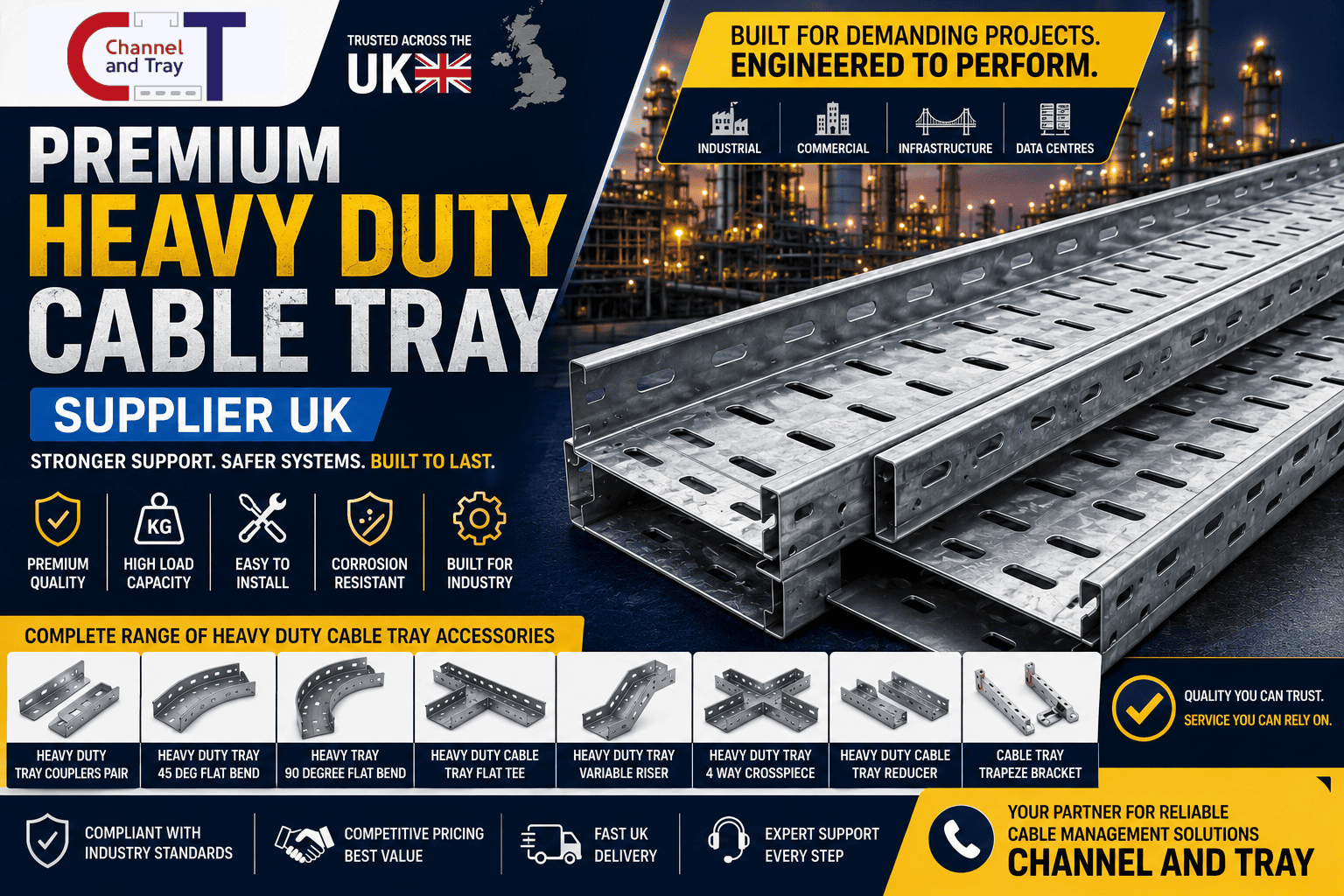
For industrial projects, I always recommend Heavy Duty Cable Tray.
These are perfect for:
- Factories
- Industrial plants
- Power infrastructure
- Large cable bundles
They can support heavier cable loads and perform well in demanding environments.
4. Metal Trunking
Sometimes I choose Metal Trunking when cables need extra protection or a clean wall-mounted installation.
Metal trunking works well for:
- Indoor electrical installations
- Wall cable routing
- Protecting cables from damage
5. Cable Ladder Systems
For projects with very heavy cables, I usually install a Cable Ladder system.
Cable ladders provide:
- Strong support for large cable bundles
- Excellent ventilation
- Easy cable access
This is common in industrial and power distribution projects.
6. Cable Basket Systems
When I’m working with data cables or networking systems, I often use Cable Basket trays.
They are ideal for:
- Data centres
- IT installations
- Network cable routing
The open design allows excellent airflow and easy cable management.
Using Strut Channel for Cable Support
Another important system I rely on is the Strut Channel.
Strut channels help me:
- Support cable trays
- Mount electrical equipment
- Create flexible support frames
They are widely used in UK construction because they are strong, adjustable, and easy to install.
Don’t Forget Cable Tray Accessories
A good cable tray installation also requires the right Cable Tray Accessories, such as:
- Connectors
- Supports
- Bends
- Brackets
These components make installation easier and ensure the system stays secure over time.
Tips I Follow When Choosing Cable Tray Systems
Here are a few things I always check before selecting a cable tray:
1. Cable Load
I calculate the total weight of cables to choose the right tray strength.
2. Installation Environment
Outdoor or industrial areas may require stronger materials or coatings.
3. Ventilation Needs
Open trays or ladders help prevent cable overheating.
4. Future Expansion
I always plan space for additional cables in the future.
Why I Trust Channel and Tray Products
When selecting cable management systems, I look for reliable quality and durable materials.
At Channel and Tray, we provide solutions like:
- Strut Channel systems
- Cable Trays & Trunking
- Heavy Duty Cable Tray
- Metal Trunking
- Cable Ladder
- Cable Basket
- Lighting Trunking & Bends
- Cable Tray Accessories
These products are designed to support modern UK electrical installations with strong and efficient cable management systems.
Choosing the right cable tray system is an important step in any electrical or construction project. From Light Duty Cable Tray & Bends for small installations to Heavy Duty Cable Trays and Cable Ladder systems for industrial projects, each solution plays a key role in keeping cables organised and protected.
When I plan cable management systems, I always focus on load capacity, installation environment, and future expansion.
If you are planning a project and need reliable cable management products, visit https://channelandtray.com/ to explore a wide range of Strut Channels, Cable Trays, Trunking, Cable Ladders, and Accessories designed for modern UK installations.
FAQs – Cable Tray Systems in the UK
- What is the best cable tray for heavy cables?
For heavy cables, I usually recommend Heavy Duty Cable Tray or Cable Ladder systems because they provide strong structural support.
- When should I use cable basket trays?
Cable basket trays are best for data cables, networking systems, and IT installations because they allow airflow and easy cable access.
- Are cable trays better than conduits?
Cable trays are often better for large cable installations because they make cable installation, maintenance, and upgrades easier.
- What material is best for cable trays in the UK?
Galvanised steel is commonly used because it provides strength, corrosion resistance, and durability.
- Can cable trays be used outdoors?
Yes. Many cable tray systems are designed for outdoor environments, especially when coated or galvanised.