As electrical installations across the United Kingdom become more complex, electricians, contractors, and facility managers are increasingly choosing cable tray systems over traditional wiring methods. From commercial buildings and industrial facilities to data centres and infrastructure projects, cable trays provide a safer, more efficient, and cost-effective cable management solution.
This shift is not just about convenience—it is about improving installation speed, simplifying maintenance, and ensuring long-term reliability.
What Is a Cable Tray System?
A cable tray is a structural support system designed to carry and protect electrical cables. It provides an organised route for power, communication, and data cables while allowing easy access for inspection, maintenance, and future expansion.
Cable tray systems are widely used throughout the UK in:
- Commercial offices
- Industrial plants
- Manufacturing facilities
- Data centres
- Hospitals
- Schools and universities
- Warehouses and distribution centres
- Renewable energy projects
Why More UK Electricians Are Choosing Cable Trays?
1. Faster Installation Saves Time and Labour
One of the biggest reasons electricians are switching to cable trays is installation speed.
Unlike conduit systems, cable trays require fewer fittings and allow cables to be laid quickly, reducing labour costs and project completion times.
Key Benefits
- Faster cable routing
- Reduced installation time
- Lower labour costs
- Easier modifications during projects
This makes cable trays especially attractive for large commercial and industrial installations where efficiency is critical.
2. Easier Maintenance and Future Expansion
Modern electrical systems often require upgrades and additional circuits.
Cable trays provide open access to cables, making maintenance and future expansion significantly easier compared to enclosed conduit systems.
Advantages Include
- Quick cable inspection
- Easier fault finding
- Simple cable additions
- Reduced downtime
For UK data centres, factories, and commercial buildings, this flexibility is invaluable.
3. Improved Cable Management
Poorly organised cables can create safety risks and make troubleshooting difficult.
Cable trays help electricians maintain:
- Neat cable layouts
- Proper cable separation
- Improved airflow around cables
- Better overall system organisation
This professional finish is one reason why cable trays are becoming the preferred solution across the UK.
4. Suitable for Light, Medium, and Heavy-Duty Applications
Different projects require different levels of support.
Light Duty Cable Tray
Ideal for:
- Structured cabling
- Office buildings
- Retail premises
- Communication systems
Medium Duty Cable Tray
Suitable for:
- Commercial buildings
- Schools and hospitals
- General electrical installations
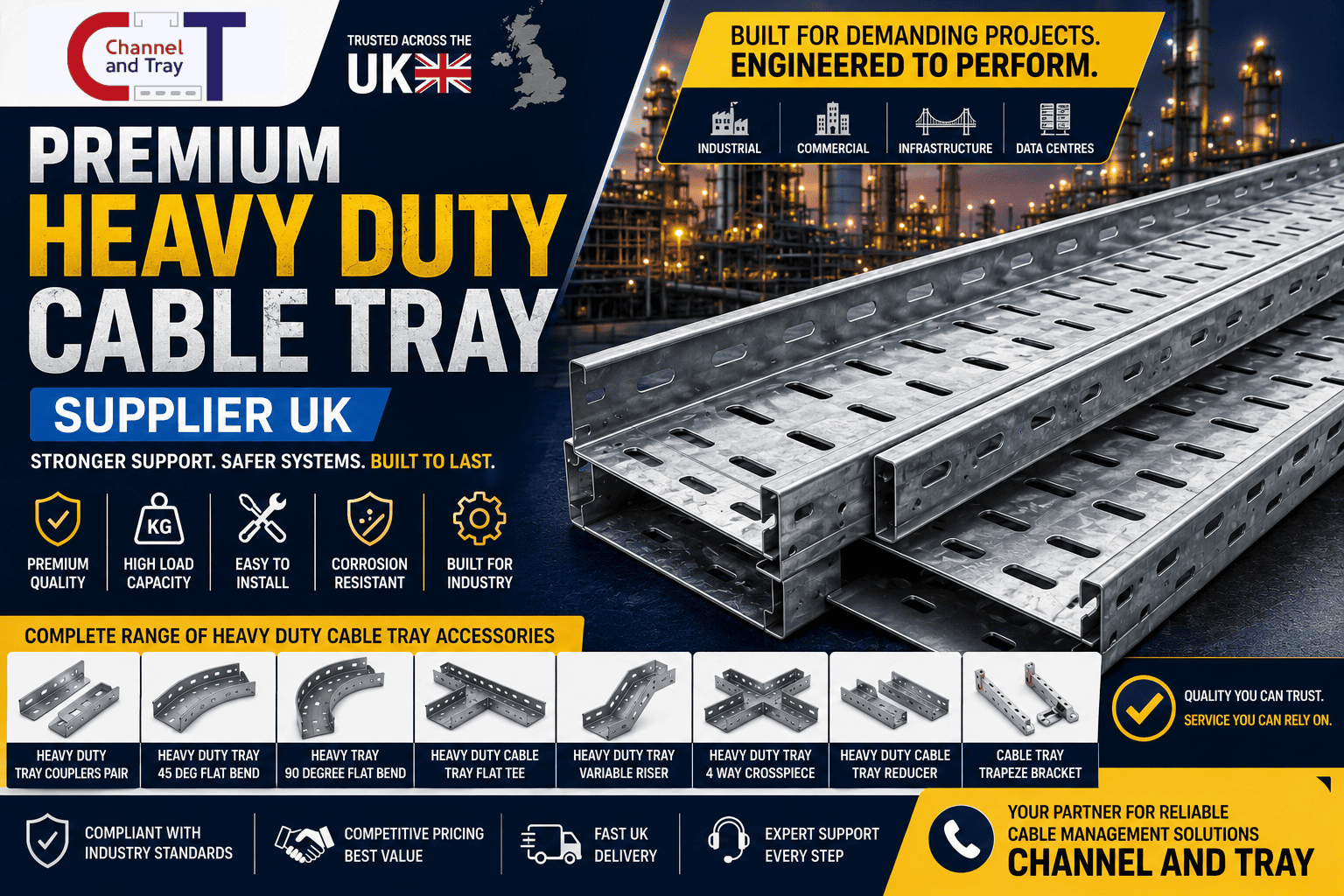
Heavy Duty Cable Tray
Designed for:
- Industrial plants
- Power stations
- Data centres
- Manufacturing facilities
Choosing the correct tray ensures maximum strength and long-term reliability.
5. Better Ventilation and Heat Dissipation
Unlike enclosed wiring systems, cable trays allow natural airflow around cables.
This helps:
- Reduce heat build-up
- Improve cable performance
- Increase cable lifespan
- Minimise overheating risks
For installations carrying high electrical loads, ventilation is a major advantage.
6. Cost-Effective Solution
Cable tray systems provide excellent value over the lifetime of an installation.
Long-Term Savings Include
- Lower labour costs
- Reduced maintenance expenses
- Easier upgrades
- Faster project completion
- Improved cable accessibility
For contractors and electrical engineers throughout the United Kingdom, cable trays deliver both performance and cost efficiency.
Popular Applications Across the UK
Cable tray systems are commonly used in:
Data Centres
Supporting power and structured cabling infrastructure.
Commercial Buildings
Providing organised cable management for offices and retail spaces.
Industrial Facilities
Handling heavy-duty power distribution systems.
Hospitals and Educational Buildings
Ensuring safe and accessible cable routes.
Warehouses and Distribution Centres
Supporting lighting, power, and automation systems.
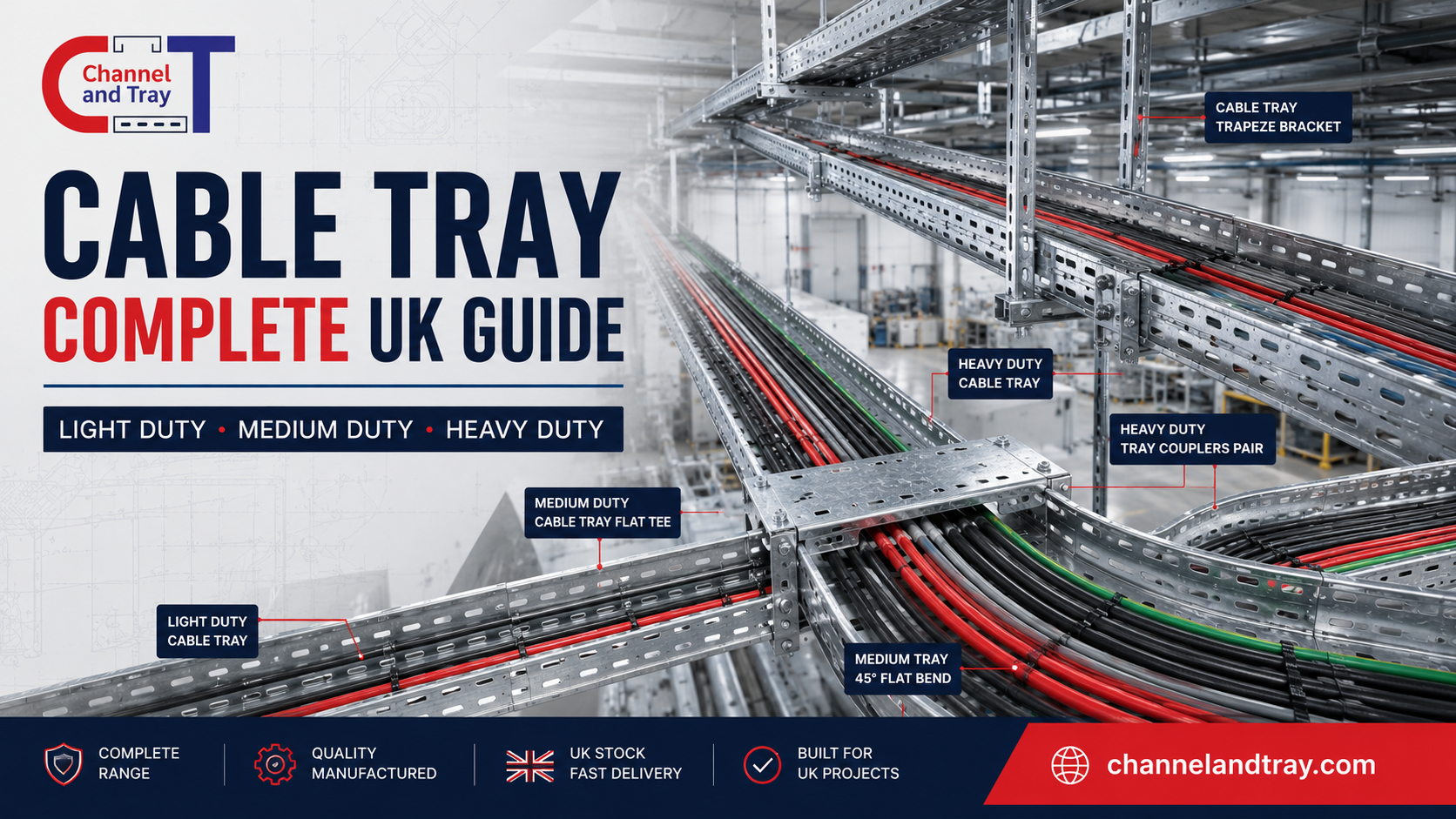
Cable Tray Accessories That Complete the System
A reliable cable tray installation requires the right accessories, including:
- Couplers
- Flat bends
- Tee fittings
- Risers
- Reducers
- Support brackets
- Suspension systems
- Fixings and fasteners
Using compatible accessories ensures structural integrity and long-term performance.
Why Choose Channel and Tray?
At Channel and Tray, we supply a comprehensive range of cable management products throughout the UK.
Our Range Includes
✓ Light Duty Cable Tray
✓ Medium Duty Cable Tray
✓ Heavy Duty Cable Tray
✓ Metal Trunking Systems
✓ Couplers and Accessories
✓ Fittings and Support Components
Why Customers Choose Us
- Competitive pricing
- Fast UK delivery
- Extensive stock availability
- Quality products built to industry standards
- Complete cable management solutions from one supplier
Final Thoughts
The growing adoption of cable tray systems across the United Kingdom reflects the industry’s need for faster installation, improved accessibility, and long-term reliability.
Whether you’re working on a commercial office, industrial facility, or data centre project, cable trays offer a practical and scalable cable management solution.
As more UK electricians prioritise efficiency and future-proof installations, cable trays continue to become the preferred choice for modern electrical infrastructure.
FAQs
1. Why are UK electricians increasingly using cable trays?
Cable trays provide faster installation, easier maintenance, and greater flexibility than traditional conduit systems. They are widely used across commercial and industrial projects throughout the UK.
2. What are the advantages of cable trays over conduit?
Cable trays offer better accessibility, reduced labour costs, improved ventilation, and easier future cable additions compared with conduit systems.
3. Where are cable trays commonly used in the UK?
Cable trays are commonly installed in offices, hospitals, schools, warehouses, factories, power stations, and data centres across the United Kingdom.
4. Which type of cable tray is best for commercial buildings?
Medium-duty cable trays are typically the preferred choice for commercial buildings due to their balance of strength, versatility, and cost-effectiveness.
5. What is a heavy-duty cable tray used for?
Heavy-duty cable trays are designed for demanding applications such as power stations, industrial plants, manufacturing facilities, and data centres.
6. Are cable trays suitable for data centres?
Yes. Cable trays are widely used in UK data centres because they provide excellent cable organisation, airflow, and easy access for maintenance and future expansion.
7. Can cable trays be installed outdoors?
Yes. Hot-dip galvanised cable trays are suitable for outdoor environments and provide excellent corrosion resistance.
8. Are cable trays compliant with UK electrical standards?
Quality cable tray systems are manufactured to meet relevant British and international standards, making them suitable for professional installations.
9. Which cable tray is suitable for structured cabling?
Light-duty cable trays are commonly used for structured cabling systems, telecommunications, and low-voltage applications.
10. Do cable trays reduce installation time?
Yes. Cable trays simplify cable routing and require fewer fittings, helping electricians complete projects more efficiently.
11. What accessories are required for cable tray installations?
Common accessories include couplers, bends, tees, reducers, support brackets, suspension systems, and fixings.
12. Can cables be added to an existing cable tray system?
Yes. One of the biggest advantages of cable trays is the ability to add or modify cables without major disruption.
13. Why are cable trays preferred for industrial projects?
Cable trays provide high load capacity, easy maintenance, and scalability, making them ideal for industrial environments.
14. Do cable trays improve cable ventilation?
Yes. Their open design allows natural airflow around cables, helping to reduce heat build-up and improve cable performance.
15. Are galvanised cable trays corrosion resistant?
Yes. Galvanised finishes provide excellent protection against corrosion and are suitable for many indoor and outdoor applications.
16. What is the difference between light, medium, and heavy-duty cable trays?
Light-duty trays are used for smaller cable loads, medium-duty trays suit commercial projects, and heavy-duty trays are designed for large power and industrial applications.
17. Are cable trays more cost-effective than conduit systems?
In many applications, cable trays offer lower installation and maintenance costs, making them a more economical long-term solution.
18. Which industries use cable trays the most in the UK?
Cable trays are widely used in construction, manufacturing, healthcare, education, energy, logistics, telecommunications, and data centre infrastructure.
19. Where can I buy cable trays and accessories in the UK?
Complete cable tray systems, fittings, and accessories are available from specialised suppliers such as Channel and Tray, with fast delivery across the United Kingdom.
20. Why choose Channel and Tray for cable management solutions?
Channel and Tray supplies light-duty, medium-duty, and heavy-duty cable trays, along with fittings and accessories, offering competitive prices and nationwide UK delivery.