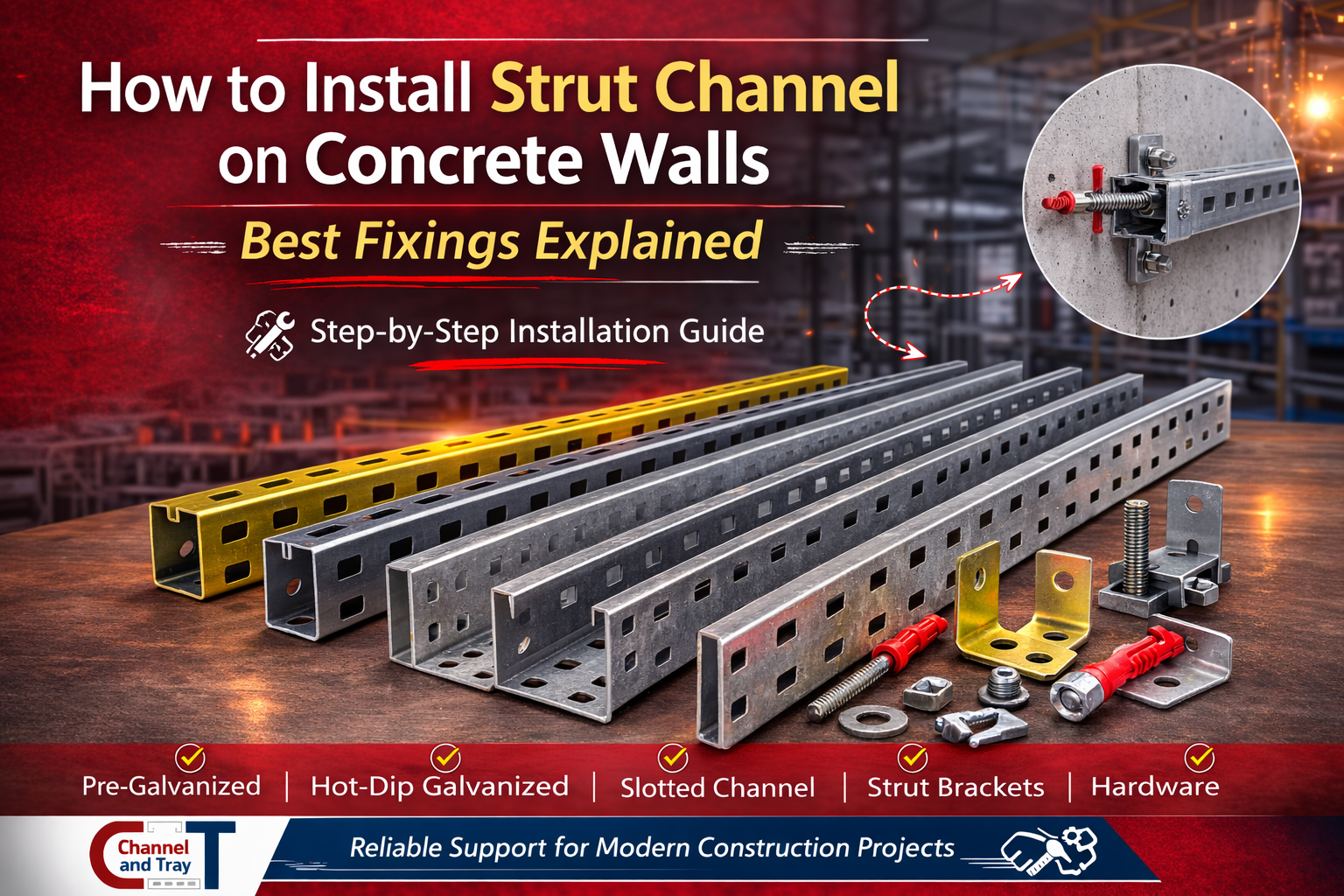
Proper installation is essential when learning how to fix strut channel to concrete walls. Strut channels are widely used in electrical, mechanical, and construction projects to support cable trays, pipes, conduits, and HVAC systems. When installed correctly, they provide a strong and reliable support structure for heavy loads.
In this guide, we explain how to fix strut channel to concrete walls, the best fixings to use, and the steps professionals follow for secure installation.
Why Strut Channels Are Used in Construction
Strut channels are popular in modern building projects because they offer:
-
Strong structural support for equipment and cable systems
-
Quick and flexible installation
-
Compatibility with various brackets and fixings
-
Durable galvanized finish for corrosion resistance
They are commonly used in electrical installations, cable tray systems, HVAC supports, and industrial frameworks.
Best Fixings for Strut Channel on Concrete Walls
When learning how to fix strut channel, choosing the correct fixing is important for safety and durability.
1. Concrete Anchor Bolts
Concrete anchor bolts are one of the most reliable options for fixing strut channels to concrete surfaces. They provide strong load-bearing support and are commonly used in heavy-duty installations.
2. Sleeve Anchors
Sleeve anchors are ideal for medium-duty applications. They expand inside the concrete when tightened, providing a secure hold for the strut channel.
3. Wedge Anchors
Wedge anchors are widely used in industrial installations because they offer high load capacity and excellent vibration resistance.
4. Chemical Anchors
Chemical anchors use a resin-based adhesive that bonds the fixing to the concrete. This method is perfect for heavy structural installations.
Step-by-Step Guide: How to Fix Strut Channel to Concrete Walls
Follow these steps to properly install a strut channel on a concrete wall.
Step 1: Mark the Installation Points
Measure and mark where the strut channel will be installed. Ensure the alignment is correct before drilling.
Step 2: Drill the Holes
Use a hammer drill with the correct drill bit to create holes in the concrete wall for the anchors.
Step 3: Insert the Anchors
Insert the selected fixing (anchor bolt, wedge anchor, or sleeve anchor) into the drilled holes.
Step 4: Position the Strut Channel
Place the strut channel over the anchor bolts and ensure it aligns with the drilled holes.
Step 5: Tighten the Bolts
Secure the channel using washers and nuts, tightening them firmly to ensure stability.
Step 6: Check Alignment and Strength
Finally, ensure the channel is level and securely attached to the wall.
Common Applications of Strut Channels
Strut channels are widely used in:
-
Cable tray installations
-
Pipe support systems
-
HVAC installations
-
Electrical conduit mounting
-
Industrial equipment supports
Their versatility makes them an essential component in modern construction and electrical infrastructure projects.
FAQ – How to Fix Strut Channel
1. What is the best fixing for a strut channel on a concrete wall?
The best fixings are wedge anchors, sleeve anchors, or chemical anchors, depending on the load requirements and installation environment.
2. How far apart should strut channel fixings be?
Fixings are usually spaced 600mm to 1200mm apart, depending on the load and installation requirements.
3. Can strut channels support heavy loads?
Yes, strut channels can support heavy loads when installed correctly with the right anchors and brackets.
4. Do I need special tools to install a strut channel?
Yes, you typically need a hammer drill, masonry drill bit, anchors, washers, and spanners for installation.
5. Are galvanized strut channels suitable for outdoor use?
Yes. Hot-dip galvanized strut channels are corrosion-resistant and ideal for outdoor or industrial environments.